

Long live Seville, its fair and its women dressed in flamenco attire!
THE SMELL OF THE SAND FAIR IS ALREADY IN THE AIR, THE APRIL FAIR IS ALMOST HERE!
WE ARE EXCITED TO KNOW THAT SOON WE WILL BE AT THE FAIRGROUNDS, WHERE THE STREETS ARE FILLED WITH COLOR AND MUSIC.
More than just a long-standing tradition , it's a spectacle in itself. Those who have been at least once know what I mean.
But let's start from the beginning, taking a short tour of this festival full of art and charm .
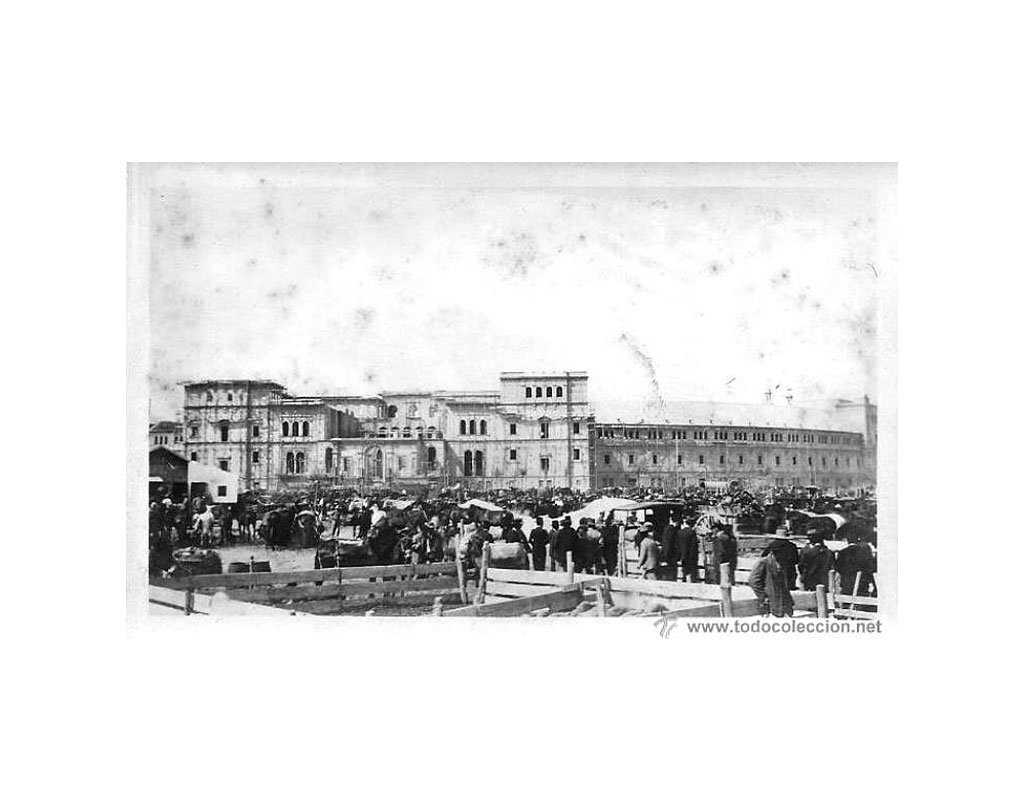
Its origins date back to 1846, when it began with purely commercial purposes, involving the buying and selling of livestock. Hence the traditional horse-drawn carriages and riders we see today, as a representation and evocation of what it once was.
We must mention certain changes such as the “Women on horseback” . Before, riding a horse was something exclusively male, and it was viewed negatively for a woman to be holding the reins instead of riding behind.
We are very pleased with this progress, and it must be emphasized that nowadays, a woman riding a horse is a sign of class , distinction and character .

HE TRIES TO TAKE AWAY A SEVILLIAN'S FAIR…
It is curious that although the April Fair is currently seen as a purely Sevillian event, the businessmen who saw this type of commerce as profitable were the councilors José María Ybarra , born in the Basque Country, and Narciso Bonaplata , of Catalan origin.
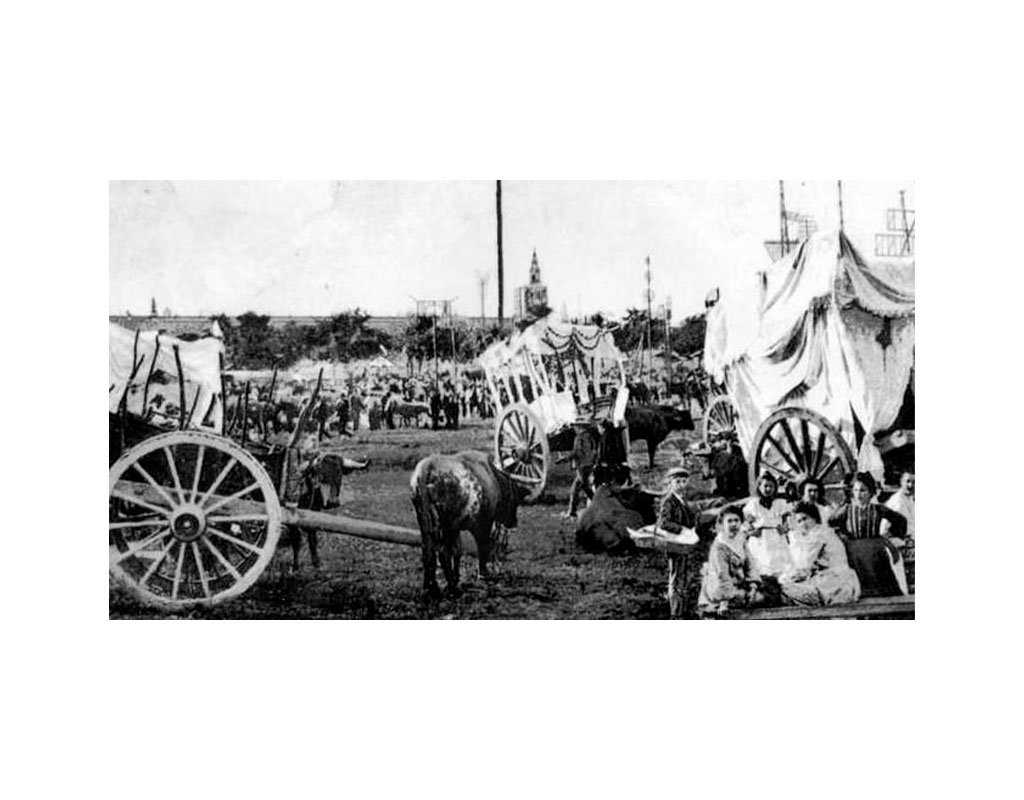
The fair was formerly located in the Prado de San Sebastián, but due to the large influx of visitors, it had to be moved to a venue capable of accommodating the millions of people who visit the fair daily. The fairgrounds were then divided into three clearly differentiated parts: the main fairgrounds , the "Calle del Infierno" (Hell Street) , and the parking areas .

Let's start with the most important part, the fairgrounds, where all the booths are grouped together. For a Sevillian, these could easily be their second home. They are spaces that, for a short time, become the place that brings together the most important things in life: family, friends, music, and lots of joy.
The "casetas" are small structures covered by tarpaulins with distinctive red or green stripes. They usually have tables and chairs typical of the period, which, although not exactly comfortable, are emblematic details of our fair as we know it today; a representation of how life was lived in 19th-century Seville.

I believe that although it is currently recognized as a great social event, if we look deeper it can mean a great life experience.
ISN'T IT INCREDIBLE TO BE ABLE TO SEE, LIVE AND BREATHE FOR A FEW DAYS AS OUR ANCESTORS DID?
We are very lucky to be able to experience it for one week a year and as a good Sevillian would say: "Once a year doesn't hurt."

Another point to consider is the sheer number of streets that make up "El Real." Believe me, unless you're a regular at the April Fair, it can be a bit of a labyrinth with names of famous people and bullfighters. Nothing a good map can't fix, though, and you'll easily find one.

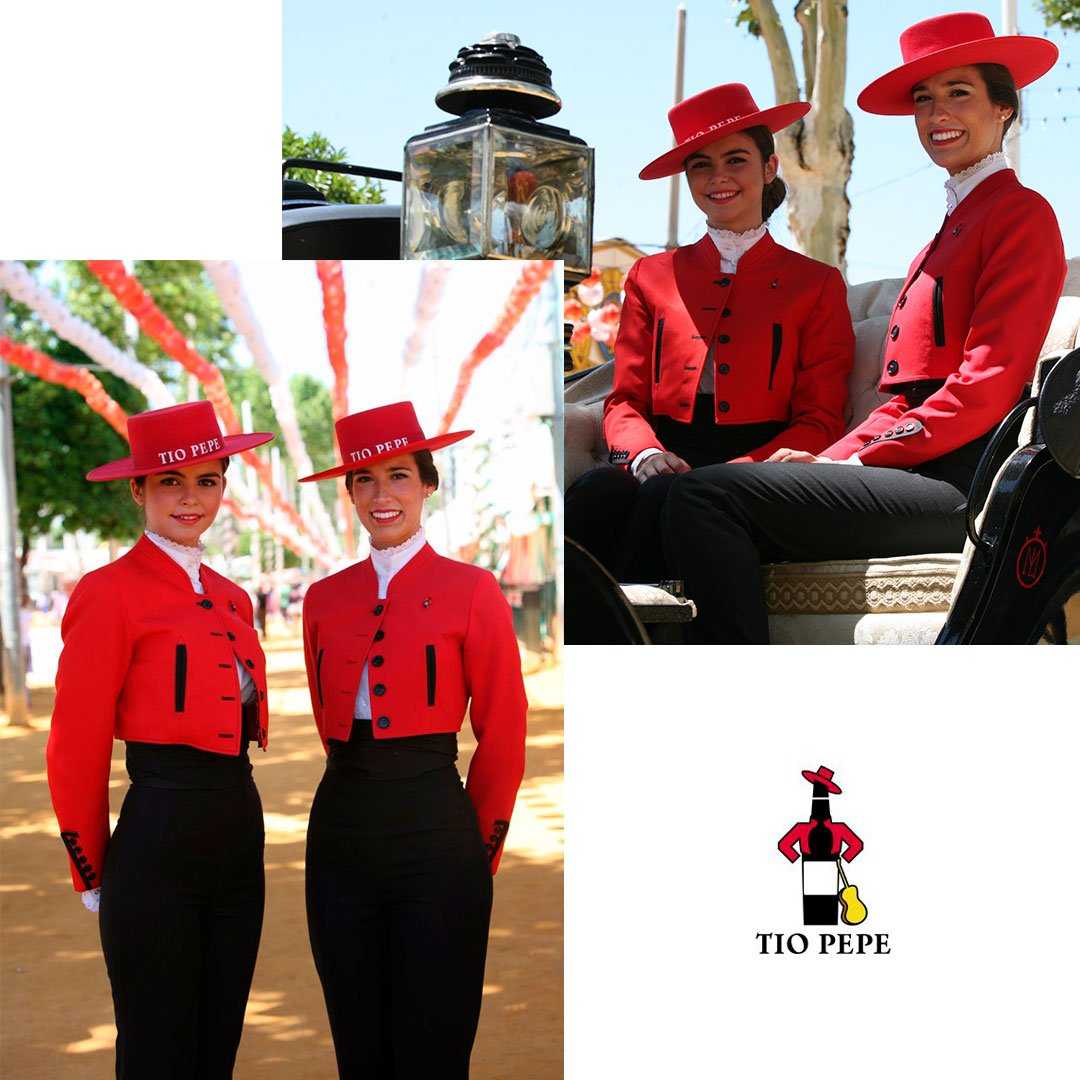
If you can't find it at the information office, the ever-present "Uncle Pepe girls" might also help. You'll recognize them by their outfits inspired by bullfighter costumes, and they're usually the traditional "Sevillian beauties." Keep an eye out for them, as the fans they hand out will come in handy during the Sevillian spring.
Now we move on to something that's a dream come true for the little ones: "Hell Street." Don't let the name fool you, because it could very well be paradise for those intrepid thrill-seekers between sips of "rebujito" (a sherry-based cocktail). If anything, it's hell for the unfortunate parents who are forced to spend long hours amidst the deafening noise, although they do get to enjoy their children's laughter as they run from one ride to another.
However, it's not all about "ride-and-ride" rides or, as they used to be called, "carousels." Although that expression isn't used much among younger people, we've all heard it from our parents or grandparents.
As I was saying, in addition to the typical fairground attractions, we also have the Great World Circus , thousands of different food stalls (as if the amount of food you find in the booths isn't enough) and the raffles shouting "pilot dog".

THE FAIR BEGINS
Impatiently, we arrived at "Pescaíto Day ," the day that officially kicks off the April Fair. Of course, this was after spending hours getting ready to look our best, because if there's one thing that characterizes the people of Seville, it's their impeccable style. Like true gentlemen...
We leave home and walk. As we get closer, we see that there are more and more people in the street, and euphoria begins to take hold.
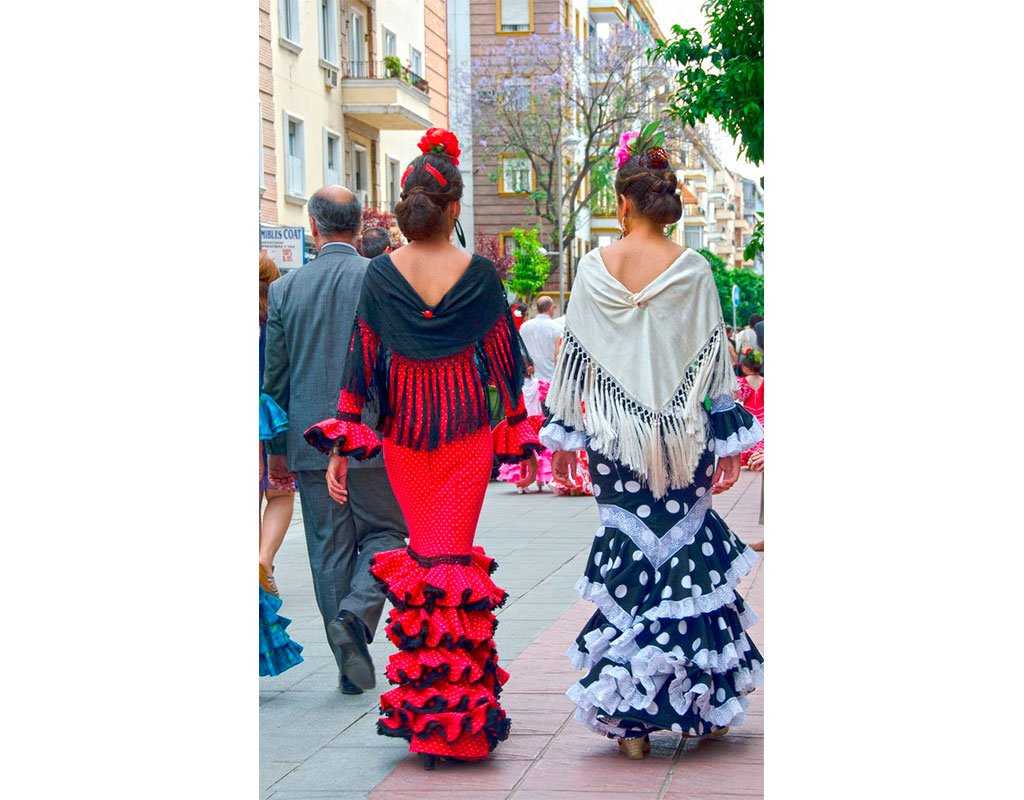
In the distance you see the first trace of lights and a burst of the smell of wet sand.
We finally set foot in the fair, but not just anywhere! We enter through the magnificent main gate and take the emblematic "Joselito el Gallo" street.
We head to the booth where they're waiting for us with fried fish. The Sevillanas music starts playing and then there's no doubt, another year has passed:
THE APRIL FAIR IS OFFICIALLY OPENED!
THE APRIL FAIR FOR A WOMAN
For a woman from Seville, the fair is not just a traditional festival, but involves months and months of preparation.
You have no idea how many details you have to prepare before dressing up as a flamenco dancer.
I think that, like me, most women from Seville (with a few stragglers still behind), have been thinking about their flamenco dress since Christmas ended, and it's no wonder!
Follow us! We're going to tell you everything that goes into a woman dressed as a flamenco dancer.
It's true they're not secrets, but if you're not from Andalusia, it's hard to know. Like geishas, we meticulously attend to every detail of this process, which is passed down from generation to generation.
THAT'S WHY IT'S HARD TO FIND A GOOD MANUAL ON HOW TO DRESS.
Which of us hasn't had our mother, sister, or friend help us put on our flower? And not only that, but you probably invite your best friends over on wedding day so you can get dressed together and help each other out. It's a special moment; you don't just let anyone into your home for that. You could say it's a "typical ritual," and one that women love.
IT'S A MOMENT WHEN CONFIDENCES ARE SHARED…
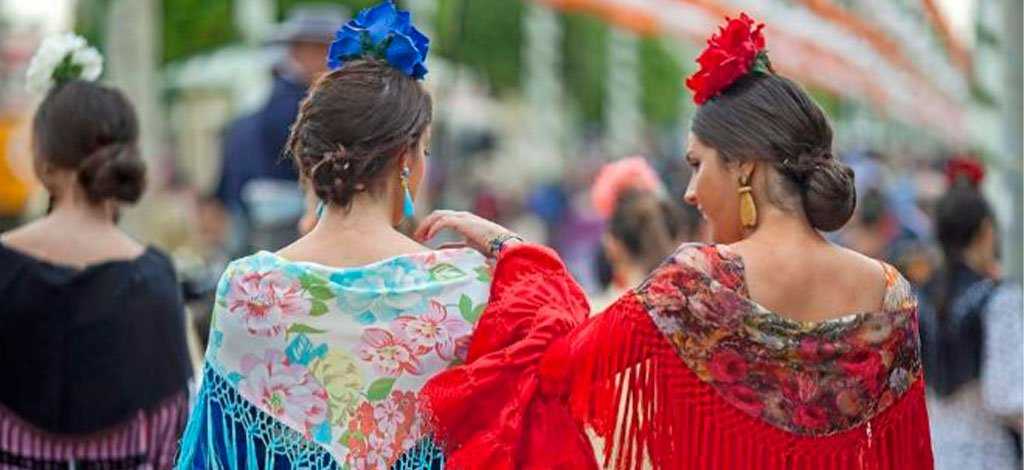
From the moment we start "checking out" the new trends on the flamenco fashion runways until the day you go to try them on, it's all a long and exciting journey.
The day finally arrives when you make up your mind. First, you're going to buy several meters of fabric—and not just any fabric! Poplin is all the rage this year. You go to your trusted dressmaker, the one who waits for you every year to suggest something completely different from what you had in mind.
You know exactly what you want: a dress with a single ruffle from the knee down, tiered sleeves, a V-neck, and of course, the open back detail you've been craving since last year.
Why the craving? … Because you saw a girl at the fair and you loved her dress. Let's admit it, it's happened to all of us.
The second step, the one that comes after we've relieved our anxiety because at least the dress is already in the process of being made, is the dilemma… “ which flower suits it?” or “ What would be the best combination for our spectacular flamenco dress?”

You end up going to Don Regalón and a thousand other shops to choose flowers. But, seeing so many all at once, you realize you don't know if you want one flower or several, and you don't even know if you're going to add a hair comb.
In the end, I came to the conclusion that I wanted three peonies in the shape of a headband to wear it slightly tilted.
And what about the shawl? As my grandmother would say: "If you take away the shawl, you take away the charm of the dress."
It is true that we are seeing more and more dresses without a shawl, but it is undoubtedly an essential accessory.

As we mentioned, the flamenco dress is a symbol of our culture, and the shawl in particular has a rather humble origin, since in its beginnings it was used by gypsy women and peasant women as a work uniform.
ANOTHER ESSENTIAL ACCESSORY IS EARRINGS, AND IF YOU ARE LOOKING FOR SOMETHING DIFFERENT AND FLAMENCO, WE PROPOSE A SELECTION “VERY OUR OWN” THAT WILL MAKE YOU FALL IN LOVE.
You can also come and see them yourself at Calle Cerrajería number 8. We will be eager to assist and advise you.
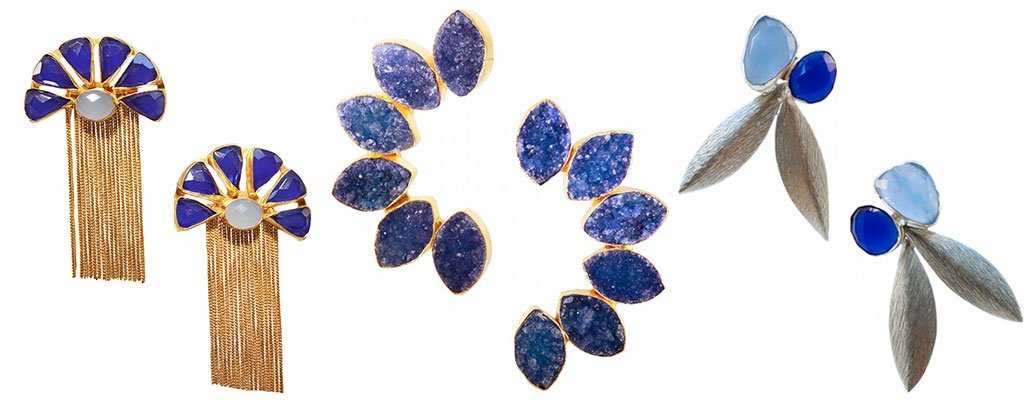
BLUES
If your dress is white, pale pink, red, or even yellow, these shades will be perfect to match it.
Earrings Taj Mahal ,earrings Boreal druzy stones and earrings Daffodil polished stones.
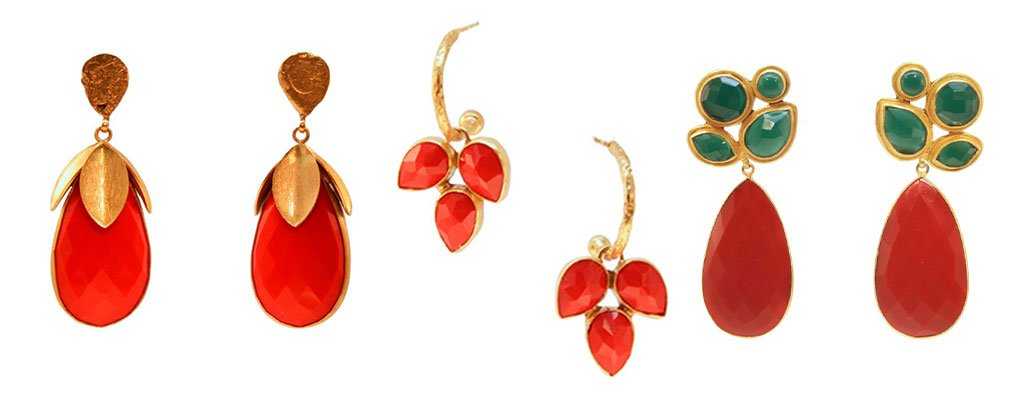
REDS
For red accessories, we would include green dresses, red polka dot dresses, and blue dresses.
Earrings Augusta , pending Detachable Coconut and pending Paradise in natural stones.
GREEN
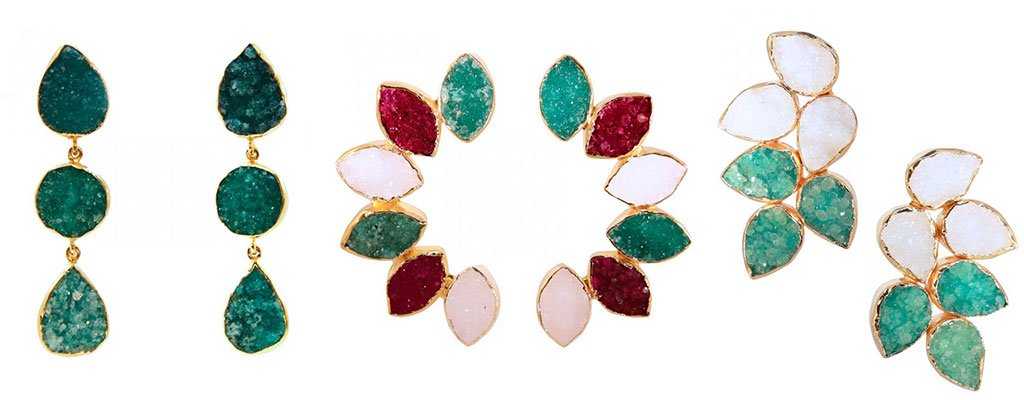
Green is one of our favorite colors and you can combine it with reds, mustards and pinks.
Earrings Mademoiselle , earrings Boreal and pending Tropic in druse stones.
ROSES
Finally, pink is one of the most requested colors by you all, and it's because it's so flattering. You can mix it with greens, whites, beige, and burgundy.
Earrings Lavender earrings Carousel and pending Alhambra in druse stones.
We hope you enjoyed our post about one of the most important events in Andalusia. We wanted to review what it was and what it is today, and what better place to do so than Seville, or three cities like Acus Team in Seville.
I hope this short stroll through the fair has convinced you to come and experience firsthand this magical city that is Seville.
WE LOOK FORWARD TO SEEING YOU AT THE ACUSLOVERS FAIR
WE INVITE YOU TO DISCOVER ALL OUR LITTLE JEWELS HERE, IN ACUS.
Credits: The images were obtained from Pinterest, visitasevilla.es and lavanguardia.com.


